“A Beautiful Young Nymph Going to Bed,” by Jonathan Swift
WRITTEN FOR THE HONOUR OF THE FAIR SEX.
1731
Corinna, pride of Drury-Lane,
For whom no shepherd sighs in vain;
Never did Covent-Garden boast
So bright a batter'd strolling toast!
No drunken rake to pick her up,
No cellar where on tick to sup;
Returning at the midnight hour,
Four stories climbing to her bower;
Then, seated on a three-legg'd chair,
Takes off her artificial hair;
Now picking out a crystal eye,
She wipes it clean, and lays it by.
Her eyebrows from a mouse's hide
Stuck on with art on either side,
Pulls off with care, and first displays 'em,
Then in a play-book smoothly lays 'em.
Now dext'rously her plumpers draws,
That serve to fill her hollow jaws,
Untwists a wire, and from her gums
A set of teeth completely comes;
Pulls out the rags contrived to prop
Her flabby dugs, and down they drop.
Proceeding on, the lovely goddess
Unlaces next her steel-ribb'd bodice,
Which, by the operator's skill,
Press down the lumps, the hollows fill.
Up goes her hand, and off she slips
The bolsters that supply her hips;
With gentlest touch she next explores
Her chancres, issues, running sores;
Effects of many a sad disaster,
And then to each applies a plaster:
But must, before she goes to bed,
Rub off the daubs of white and red,
And smooth the furrows in her front
With greasy paper stuck upon't.
She takes a bolus ere she sleeps;
And then between two blankets creeps.
With pains of love tormented lies;
Or, if she chance to close her eyes,
Of Bridewell[1] and the Compter[1] dreams,
And feels the lash, and faintly screams;
Or, by a faithless bully drawn,
At some hedge-tavern lies in pawn;
Or to Jamaica[2] seems transported
Alone, and by no planter courted;
Or, near Fleet-ditch's[3] oozy brinks,
Surrounded with a hundred stinks,
Belated, seems on watch to lie,
And snap some cully passing by;
Or, struck with fear, her fancy runs
On watchmen, constables, and duns,
From whom she meets with frequent rubs;
But never from religious clubs;
Whose favour she is sure to find,
Because she pays them all in kind.
Corinna wakes. A dreadful sight!
Behold the ruins of the night!
A wicked rat her plaster stole,
Half eat, and dragg'd it to his hole.
The crystal eye, alas! was miss'd;
And puss had on her plumpers p--st,
A pigeon pick'd her issue-pease:
And Shock her tresses fill'd with fleas.
The nymph, though in this mangled plight
Must ev'ry morn her limbs unite.
But how shall I describe her arts
To re-collect the scatter'd parts?
Or show the anguish, toil, and pain,
Of gath'ring up herself again?
The bashful Muse will never bear
In such a scene to interfere.
Corinna, in the morning dizen'd,
Who sees, will spew; who smells, be poison'd.
Yes, it’s funny, it’s meant to be. Yes, it’s nasty, spiteful, horrible -- it’s meant to be those things too. Jonathan Swift’s ironically entitled “A Beautiful Young Nymph Going to Bed,” composed in 1731 and sarcastically subtitled “Written for the Honour of the Fair Sex,” reflects the relentless, emphatically unromantic, and savagely satirical vision that marks the later years of Swift’s art. This most unpoetic of poems presents the uproarious process by means of which an eighteenth century London prostitute prepares for sleep -- a process which involves her divesting herself of those various artifices with which she seeks to disguise both her physical and moral character.
Swift’s cruel deconstruction of woman is painful. And if we look at the beauty industry today, nothing has really changed. We’ve just got a lot more sophisticated; we’re so much better at deception. We’ve got airbrushing, cosmetic surgery, more ways to remove hair than you’d think possible. And there are convincing ways to add hair too. Those wonderful hair extensions; they come in every shade you desire. There are lotions and potions that Swift’s, Corrina, pride of Drury Lane, could only dream of.
But we still have Corrina; we see her physical manifestation daily, in the media. The celebrity who has gone too far; her bee stung mouth, making her look as if she has been beaten up, rather than enhanced. And those women who decide to increase their cup size by just a few more inches. Their mutilated breasts have become udders. There are men and women, whose glow in the dark teeth are bordering on the scary.
“A young woman is seen returning home after a night out, and removing her dress, breast-lifting pads, hair extensions, false eyelashes, and a dental plate. The narrator advises that bleeding gums are one of the first signs of gum disease, which is a leading cause of tooth loss. As the woman reveals a missing tooth, she concludes that Corsodyl mouthwash is clinically proven to treat gum disease.”
This is the narrative of a TV ad running here in the UK at the moment. But it could have been based on Jonathan Swift’s satirical poem.
But Swift was one of the many writers who championed the art of satire. Here, he parodies Donne's "On His Mistress Going To Bed". Swift wanted to show the reader "the other side of the coin" and to allow poetry to illustrate everyday occurrence. More than just a parody of the pastoral style, he points out the artificiality of the world around us and challenges the reader to look below the surface.
Here is John Donne’s poem, written in 1669.
Come, madam, come, all rest my powers defy,
Until I labor, I in labor lie.
The foe oft-times having the foe in sight,
Is tired with standing though he never fight.
Off with that girdle, like heaven's zone glistering,
But a far fairer world encompassing.
Unpin that spangled breastplate which you wear,
That th' eyes of busy fools may be stopped there.
Unlace yourself, for that harmonious chime
Tells me from you that now it is bed time.
Off with that happy busk, which I envy,
That still can be, and still can stand so nigh.
Your gown, going off, such beauteous state reveals,
as when from flowry meads th' hill's shadow steals.
Off with that wiry coronet and show
The hairy diadem which on you doth grow:
Now off with those shoes, and then safely tread
In this love's hallowed temple, this soft bed.
In such white robes, heaven's angels used to be
Received by men; thou, Angel, bring'st with thee
A heaven like Mahomet's Paradise; and though
Ill spirits walk in white, we easily know
By this these angels from an evil sprite:
Those set our hairs on end, but these our flesh upright.
License my roving hands, and let them go
Before, behind, between, above, below.
O my America! my new-found-land,
My kingdom, safeliest when with one man manned,
My mine of precious stones, my empery,
How blest am I in this discovering thee!
To enter in these bonds is to be free;
Then where my hand is set, my seal shall be.
Full nakedness! All joys are due to thee,
As souls unbodied, bodies unclothed must be
To taste whole joys. Gems which you women use
Are like Atlanta's balls, cast in men's views,
That when a fool's eye lighteth on a gem,
His earthly soul may covet theirs, not them.
Like pictures, or like books' gay coverings made
For lay-men, are all women thus arrayed;
Themselves are mystic books, which only we
(Whom their imputed grace will dignify)
Must see revealed. Then, since that I may know,
As liberally as to a midwife, show
Thyself: cast all, yea, this white linen hence,
There is no penance due to innocence.
To teach thee, I am naked first; why than,
what needst thou have more covering than a man?
John Donne’s poem is intensely erotic; he is demonstrating a new explicitness about sexual desire and experience. Throughout Elegy XIX: To His Mistress Going to Bed, Donne's presumably male speaker tries to coax his mistress into bed. Donne's speaker fervently describes undressing and caressing his mistress; a poetic striptease. At the end, the speaker reveals that he is fully unclothed; however, it is unclear whether or not the mistress is undressing throughout the poem, or if she has remained clothed and the speaker is merely describing what her disrobing might be like.
The poem begins with the speaker calling to the mistress, encouraging her to come to bed. The speaker then goes on to talk about how he cannot be content until he engages in some sexual activity with the mistress. Several lines are then dedicated to the actual undressing of the mistress, piece by piece. The speaker makes several comparisons in relation to her clothing. For example, he compares her girdle to astronomical elements in the heavens. Their bed is compared to a "hallowed temple", and the speaker's physical exploration of the woman's body is compared to the exploration and subsequent settlement of the America's. While the mistress removes her clothes the speaker speaks of how beautiful her body is. He explains how he gets great pleasure in seeing the naked female body. In the conclusion of the poem instead of the speaker reiterating his remarks about the mistress's beauty, he speaks of embarking on a sexual adventure and sexual satisfaction.
Throughout the poem, Donne has incorporated words or lines that could be perceived in more than one way. These double meanings add a hint of mystery to the poem. In line 2, he does not use labour to just mean work, but to work sexually. He makes many mentions and comparisons to heaven and things that are out of this world. This in a way alludes to the fact that he feels that this woman, or mistress, that he has lusted over, described, and conquered is out of this world. To him, she is like a heaven that he has discovered here on earth.
But back to Swift’s poem. It’s not enough to argue that we must read Swift’s poem in the context of its time. As far as I can see, we’ve always “enhanced” ourselves. Both men and women. It just depends which part of our bodies we want to draw attention to.
Eyes, lips, breasts, tight jeans, baggy jeans. I sprained both ankles in the same day staggering along in those 1970’s platform shoes. The desire for long, long legs. It’s dangerous trying to be beautiful and cool.
Corrina, pride of Drury Lane, is alive and well. She is everywhere. In every city, and small town that you can think of.
Friday, 22 April 2011


Friday, 15 April 2011
BLAKE'S VISIONS

William Blake lived from 1757–1827. He was a Revolutionary Poet, an Artist, but before anything else, he was a Visionary. Because if Blake hadn’t had the visions, we wouldn’t have the Poetry and the Art.
From Wiki.
“Considered mad by contemporaries for his idiosyncratic views, Blake is held in high regard by later critics for his expressiveness and creativity, and for the philosophical and mystical undercurrents within his work. His paintings and poetry have been characterised as part of both the Romantic movement and "Pre-Romantic", for its large appearance in the 18th century. Reverent of the Bible but hostile to theChurch of England - indeed, to all forms of organised religion - Blake was influenced by the ideals and ambitions of the French andAmerican revolutions, as well as by such thinkers as Jakob Böhme and Emanuel Swedenborg.”
From Poetry about.com
“William Blake was born in London in 1757, one of six children of a hosiery merchant. He was an imaginative child, “different” from the beginning, so he was not sent to school, but educated at home. He talked of visionary experiences from a very early age: at 10, he saw a tree filled with angels when he was wandering the countryside just outside town. He read Milton as a child and he began writing “Poetical Sketches” at 13. He was also interested in painting and drawing in childhood, but his parents could not afford art school, so he was apprenticed to an engraver at the age of 14.”
Except for a few years in Sussex, his entire life was spent in London. Its streets and their names took on spiritual symbolism in his writings, much as the place names of the Holy Land did in the writings of the biblical prophets whom Blake always regarded as his spiritual progenitors. If Blake’s visions were not true mystical visions, it is probably best to regard them not as hallucinations but as the artist's intense spiritual and sensory realization of the world.”
I had what I would call a vision when I was a child. It didn’t mean anything to me then, other than that I had seen something that wasn’t really there. I’m sure that a lot of people have those sort of experiences as children. I can see it before me now, just as I saw it then. It still doesn’t make any sort of sense to me. I believe those people who saw God, when they took LSD. Their visions were mystical, transcendental; as I think that Blake’s were. Who can say that they were not real? Who can question another person’s reality?
From Open Democracy. Net
Yes, William Blake was a visionary (but not a dreamer), aware of the realities and complexities of experience, particularly the poverty and oppression of the urban world where he spent most of his life. He had an amazing insight into contemporary economics, politics and culture, and was able to discern the effects of the authoritarianism of church and state as well as what he considered the arid philosophy of a rationalist view of the world which left little scope for the imagination. His critique was carried out by means of the language of the Bible, his own specially created mythology and the extraordinary juxtaposition of text and image in his illuminated books, by means of which he intended (as he put it) to "rouze the Faculties to act".
He abhorred the way in which Christians looked up to a God enthroned in heaven, a view which offered a model for a hierarchical human politics, which subordinated the majority to a (supposedly) superior elite. He also criticised the dominant philosophy of his day which believed that a narrow view of sense experience could help us to understand everything that there was to be known, including God. Blake's own visionary experiences showed him that rationalism ignored important dimensions of human life which would enable people to hope, to look for change, and to rely on more than that which their senses told them.
From “Masterworks of British Literature”.
“No poet of all the poets, was quite as enigmatic, visionary and, well, as far-out as William Blake. Although he ranks as one of the most important and influential of all Romantic poets, he had very little (if any) contact with romantic poetry or philosophy. In fact, from a very early age, Blake felt that he had a “Divine Vision,” a spiritual calling which meant for him a life of isolation in which to pursue poetry and art. Throughout most of his life, his brilliant poetry and illustrations gained little, if any, public recognition, and he lived in loneliness and abject poverty. He is, in many respects, one of the first British individuals to choose writing and art as a profession, and, therefore, one of the first stereotypical “starving artists,” someone who sacrifices a social and material life for the sequestered life of creation.
Particularly in his later career, Blake’s poetry grows in tremendous length as he creates phantasmagorical epics in which he creates a Byzantine and fantastic world that allegorises Christianity, creating poetic narratives out of the Fall of Man, the Passion story, the struggle between good and evil. He follows in the shadow of his precursor, John Milton and Paradise Lost. Blake, however, suffuses the Christian narrative with his own wild, visionary, allegorical and, quite often, bizarre poetry”.
No less important than his Poetry was Blake’s Art. In fact, the illustrations and prints that he created for all of his volumes of poetry are as influential on Romanticism (if not more so) than his poetry itself. He created wild, swirling illustrations of angels, devils, scenes from the Bible and brilliantly colourful prints showing scenes from his own poems. Blake’s poetry is meant to be read with their accompanying illustrations.

Blake’s two collections; “The Songs of Innocence”, and “The Songs of Experience,” are companion pieces. Blake writes the poems in the former from the point of view of childlike innocence, and generally represents both a perspective that has not gained knowledge and experience concerning evil, that is poems that derive from experience before the Fall of Man and Original Sin. Blake writes poems in the latter from the point of view of adult experience in the world, or, more aptly, adulterated experience, the perspective from human experience with sin; that is poems that represent experience after the Fall of Man, and when sin becomes wrapped up in life.
Generally, each poem in each collection has its counterpart. In other words, a poem from the Songs of Innocence has its companion poem in the Songs of Experience. The most clear and famous example of this poetic dichotomy is “The Lamb” from Innocence, and “The Tyger” from Experience. The first mirrors a sort of nursery-rhyme voice of a child (of course, really, an adult creating the world as it might be seen by the child). “The Lamb” explores the Christian mystery of God’s unconditional love evidenced through Christ with complete and simple closure. All of the poem’s questions in stanza one, are answered with Christian but child-like affirmation in the second stanza. “The Tyger,” from Experience, however, is a comparatively dark and terrifying experience. In contrast to the innocent cuddliness of the Lamb, and the sweet question-answer between the child and the lamb, the Tyger depicts a fiery, powerful and dangerous creature. There is evident imagery of fire, darkness and hell. Whereas “The Lamb” answers all of the questions posed, “The Tyger” consists entirely of unanswered questions. Of course, the majority of the theological questions posed in the poem do not have answers.”
I want to look a little more closely at two of Blake’s poems from “Songs of Experience”.
In “The Sick Rose”, here Blake is the Revolutionary. He is talking about unacceptable desires: “his dark secret love” is a euphemism for corruption; not such a surprising idea in Blake’s day in a London rife with prostitution and where marriage was the socially acceptable surface that covered a multitude of other less socially-acceptable “sins”. This is, after all, about experience.

O Rose thou art sick.
The invisible worm,
That flies in the night
In the howling storm:
Has found out thy bed
Of crimson joy:
And his dark secret love
Does thy life destroy.
While the rose exists as a beautiful natural object that has become infected by a worm, it also exists as a literary rose, the conventional symbol of love. The image of the worm resonates with the Biblical serpent and also suggests a phallus. Worms are quintessentially earthbound, and symbolize death and decay. The "bed" into which the worm creeps denotes both the natural flowerbed and also the lovers' bed. The rose is sick, and the poem implies that love is sick as well. Yet the rose is unaware of its sickness. Of course, an actual rose could not know anything about its own condition, and so the emphasis falls on the allegorical suggestion that it is love that does not recognize its own ailing state. This results partly from the insidious secrecy with which the "worm" performs its work of corruption--not only is it invisible, it enters the bed at night. This secrecy indeed constitutes part of the infection itself. The "crimson joy" of the rose connotes both sexual pleasure and shame, thus joining the two concepts in a way that Blake thought was perverted and unhealthy. The rose's joyful attitude toward love is tainted by the aura of shame and secrecy that our culture attaches to love.
The Tyger
Tyger! Tyger! burning bright
In the forests of the night,
What immortal hand or eye
Could frame thy fearful symmetry?
In what distant deeps or skies
Burnt the fire of thine eyes?
On what wings dare he aspire?
What the hand dare sieze the fire?
And what shoulder, & what art.
Could twist the sinews of thy heart?
And when thy heart began to beat,
What dread hand? & what dread feet?
What the hammer? what the chain?
In what furnace was thy brain?
What the anvil? what dread grasp
Dare its deadly terrors clasp?
When the stars threw down their spears,
And watered heaven with their tears,
Did he smile his work to see?
Did he who made the Lamb make thee?
Tyger! Tyger! burning bright
In the forests of the night,
What immortal hand or eye
Dare frame thy fearful symmetry?

To go to someway to understanding “The Tyger”, we need to know Blake's symbols. One of the central themes in his major works is that of the Creator as a blacksmith. This is both God the Creator (personified in Blake's myth as Los) and Blake himself (again with Los as his alter-ego.) Blake identified God's creative process with the work of an artist. And it is art that brings creation to its fulfilment -- by showing the world as it is, by sharpening perception, by giving form to ideas.

From Pathguy.com
Blake's story of creation differs from the Genesis account. In Blake’s story, the familiar world was created only after a cosmic catastrophe. When the life of the spirit was reduced to a sea of atoms, the Creator set a limit below which it could not deteriorate farther, and began creating the world of nature. The longer books that Blake wrote describe Los's creation of animals and people within the world of nature.
In believing that creation followed a cosmic catastrophe and a fall of spiritual beings into matter, Blake recalls Gnosticism, a multi-faceted religious movement that has run parallel to mainstream Christianity. Unlike most other Gnostics, Blake considered our own world to be a fine and wonderful place, but one that would ultimately give way to a restored universe. Blake believed that his own visions, which included end-of-the- world images and sometimes a sense of cosmic oneness, prefigured this, and that his art would help raise others "to the perception of the infinite." For Blake the purpose of creation is as a place for our own growth, in preparation for the beginning of our real lives.
A casual reader or student does not have to understand Blake's mystical-visionary beliefs to appreciate "The Tyger". For the casual reader, the poem is about the question that most of us asked when we first heard about God as the benevolent creator of nature. "Why is there bloodshed and pain and horror?" Well, we’ve all heard various answers that are obviously not true and "The Tyger",in finishing without an answer, is more honest than the unsatisfactory answers we have been given, regarding this essential question of faith.
I think that "The Tyger" is about having your reason overwhelmed at once by the beauty and the horror of the natural world. "When the stars threw down their spears / And watered heaven with their tears" is the most difficult section of "The Tyger". In the creation story in "Job", the stars sing for joy at creation, a scene that Blake illustrated. While Blake greatly appreciated the explosion of scientific knowledge during his era, the beauty and power of the poem illustrates that there is something about seeing a Tyger that we can't learn from science. Perhaps he is saying that we should wonder more; let ourselves go, and permit the sense of awe and fear that defies reason. And Blake's contemporary "rationalists" who had hoped for a tame, gentle world guided by kindness and understanding must face the reality of the Tyger.
The Tyger draws us are into the presence of a transcendent mystery at the very heart of creation. It inspires a certain horror and a sense of awe, that, and a certain terrible beauty.
In his own time, Blake was often ridiculed; whether he cared or not, we don’t know. But it is Fantastic that we have his Art, his Poetry and his Visions -- and that is Fantastic, in the true sense of the word.
I think that you can see most of William Blake's artwork at The Tate Gallery in London.
Friday, 8 April 2011
Friday, 1 April 2011
MURDER IN THE FAMILY
There seems to have been a run on parents, murdering their children recently. We are shocked, it is such a heinous crime; the tears, the weeping hits us all, when we see on our televisions, the tiny coffins leaving the church. Only last week, in the UK, Christopher Grady was sentenced to life imprisonment, for the murder of his daughter, Gabby, and the attempted murder of his son, Ryan.

Eugène Delacroix. Medea about to Kill Her Children. 1838. Oil on canvas. Louvre, Paris, France
I think that it is always the case, that when something is so horrible, so difficult for us to comprehend, we can always find a parallel story in the Greek myths to compound our emotion. I am talking here about the story of Jason and Medea.
From Wiki
“Medea is known in most stories as an enchantress and is often depicted as being a priestess of the goddess Hecate or a witch. The myth of Jason and Medea is very old, originally written around the time Hesiod wrote the Theogony. It was known to the composer of the Little Iliad, part of the Epic Cycle.
Medea is pleased with her revenge thus far; she has successfully murdered Glauce, Jason’s new woman and also Glauce’s father Kreon; but resolves to carry it further: to utterly destroy Jason's plans for a new family, she will kill her own sons. She rushes offstage with a knife to kill her children. As the chorus laments her decision, the children are heard screaming. Jason rushes to the scene to punish her for the murder of Glauce and learns that his children too have been killed. Medea then appears above the stage in the chariot of the sun god Helios; this was probably accomplished using the mechane device usually reserved for the appearance of a god or goddess. She confronts Jason, revelling in his pain at being unable to ever hold his children again:
"I do not leave my children's bodies with thee; I take them with me that I may bury them in Hera's precinct. And for thee, who didst me all that evil, I prophesy an evil doom."
She escapes to Athens with the bodies. The chorus is left contemplating the will of Zeus in Medea's actions:
"Manifold are thy shapings, Providence! Many a hopeless matter gods arrange. What we expected never came to pass, What we did not expect the gods brought to bear; So have things gone, this whole experience through”!”
I was lucky enough to see Fiona Shaw’s performance of Medea, a while ago now. I remember that Fiona Shaw was weeping as she came on stage.
Startling performance as spurned wife By BBC News Online's Helen Bushby. Thursday, 1 February, 2001
“A strong stomach is often needed to sit through Greek tragedy, and Deborah Warner's compelling version of Medea, starring Fiona Shaw, is no exception.
Shaw is terrifying as the woman whose fury at her unfaithful husband erupts like a volcano before a stunned audience.
Written in ancient Greece, the play tells the tale of Medea, whose beloved husband Jason is trading her in for a younger princess.
To add insult to injury, the princess's father, King Kreon, banishes Medea and her two sons from his land. Shaw gives a moving yet repellent portrayal of the grief-stricken wife, whose hurt pride and love for Jason tear her in two. The murderous Medea wreaks havoc. After poisoning her husband's betrothed and the king, she slays both her children to spite Jason, leaving him without family and future. Shaw manages the fine balance of Medea's character with finesse, showing vulnerability and hatred in equal measure.”
Last week Christopher Grady was found guilty by the jury and sentenced to life imprisonment for the murder of his daughter Gabby, and the attempted murder of his son Ryan.
From Worcester News.
“During the trial, jurors heard that Grady had warned the children's mother, Kim Smith, she had 10 seconds to say goodbye to them before he drove into the water at Hampton Ferry.
Miss Smith, 37, said he arrived at her house in Abbot's Walk, Evesham, at around 9.15am, telling her to say goodbye, before driving away shouting the word "river". She said his face was "contorted" and "vile" with anger.
The jury of seven women and five men took five hours to find Grady guilty of both counts. He had denied the charges, telling the court it was "an accident".
The judge told Grady: "You took from Miss Smith her daughter, and from Ryan his sister. You left your family to grieve.
"She says that what you did has shattered everyone in her family. She says that what they go through every day is like a recurring nightmare."
The judge read an extract from Miss Smith's victim impact statement to the court in which she said: "I can see his (Ryan's) suffering every day, he lost his best friend in the whole world, his sister who he always thought he would have.
"I miss her so much it hurts every day. The hurt, the pain, it will never go away."
Moments after jailing Grady, the judge praised the "extraordinary and heroic" actions of all the emergency services who rushed to the river.
The judge said police, fire fighters, paramedics and staff at Birmingham Children's Hospital saved two lives and "spared nothing" to save a third.
While the judge conceded that it would be invidious to mention only some of those present at the scene by name, he noted that Inspector Sean Kent and fireman Jason Mayhew had both risked their own lives.
The court heard that Mr Kent entered the water to save Ryan, while Mr Mayhew spent up to five minutes in the Avon, diving to the car in an attempt to attach a hook to the vehicle to save Gabby.
"I commend them and each of their colleagues for everything they did," the judge said. "Such work often goes unrecognised and it should not."
On the court steps after the hearing, Miss Smith said: "I can't say I am wholly pleased with the minimum tariff Mr Grady has received today.”
In the week when one father murdered his four children, and another was jailed for life, Lorna Martin investigates the motives and twisted minds of the men Americans call 'family annihilators'. Are they driven by hatred, revenge or mad, possessive love? Taken from Lorna Martin The Observer, Sunday 5 November 2006. “Fathers who kill their children.”
“It isn't surprising that we tend to recoil in horror at such tragedies and seek comfort in the belief that they are isolated incidents, senseless - and, as a consequence, impossible to avert. But the truth may be slightly less palatable. Although rare, figures show that a child in the United Kingdom is far more likely to be murdered by his or her parent than by a stranger. Even more disturbing is that many experts insist that they are virtually all premeditated.
The most recent crime statistics, for 2002/03, show that 99 people under the age of 16 were murdered in England and Wales, and seven in Scotland. More than half were killed by a parent, another 10 per cent by someone else they knew, and fewer than 20 per cent by a person unknown to them. Further analysis of the figures has shown that it is more likely that your partner is going to kill your children if you leave him than that they are going to be killed by a stranger in the park. In the past week alone, there have been two cases of what American criminologists have dubbed 'the family annihilator'.
In Northampton, 33-year-old Gavin Hall, a hospital radiographer, was jailed for life for murdering his three-year-old daughter, Amelia, known as Millie. After discovering sexually explicit emails sent by his wife, Joanne, to a part-time judge whom she had met on the internet, Hall set out to destroy his family. The night before he murdered Millie, he killed their two cats. Police believe he intended to kill Millie, her one-year-old sister, Lucy, and himself that night, but received a text message from Joanne, who was working nightshift, that led him to believe the marriage might not be over.
The following night, however, after a row with his wife, he realised it was. When Millie woke up during the night, he brought her downstairs and asked her repeatedly whether she wanted to 'come with daddy'. When she said she did, he gave her sleeping tablets and anti-depressants, then covered her nose and mouth with a handkerchief soaked in chloroform, before strangling her.
In August, John Hogan, a 32-year-old businessman from Bristol, threw his six-year-old son, Liam, to his death from a hotel balcony in Crete. Moments later, he jumped from the same fourth-floor balcony with his two-year-old daughter, Mia. Both survived with broken bones. In this case, there were also marital problems: his wife, Natasha, 34, was threatening to leave. Again, the response was to kill his children and himself. Hogan, whose two brothers had committed suicide, has since tried again to take his own life and remains in a psychiatric hospital in Athens, accused of murder and attempted murder.
While the perpetrators of murder-suicides are usually men, in 5 per cent of cases it is the mother who is responsible. On Friday, a court in Hull heard that Angela Schumann, 28, had jumped 100ft from the Humber Bridge with her two-year-old daughter, Lorraine, in her arms. Schumann had written a note on her stomach, blaming her estranged husband. Both survived, but Schumann, who had left a note saying she 'didn't have to be a prisoner ... or his slave', faces imprisonment after admitting the attempted murder of her daughter.
Another case involving a mother as the perpetrator occurred in April, when 40-year-old Alison Davies jumped from the same bridge, killing herself and her 12-year-old autistic son, Ryan.
At the heart of this is a question wrapped in such complexity that it can never be satisfactorily answered. What drives an individual to carry out an act of such unspeakable brutality against his or her own children? Is it hatred or despair, revenge or a madly possessive love? And what - if anything - can be done to prevent it?
The subject has been most widely studied in America, where there are 10 murder-suicides each week. According to Professor Jack Levin, a leading expert from North-Eastern University in Boston, Massachusetts, the most significant factors are family break-up, male sexual jealousy, a need to be in control and extreme possessiveness.
‘The profile of a family annihilator is a middle-aged man, a good provider who would appear to neighbours to be a dedicated husband and a devoted father,' Levin said. 'He quite often tends to be quite isolated. He is often profoundly dedicated to his family, but has few friends of his own or a support system out with the family. He will have suffered some prolonged frustration and feelings of inadequacy, but then suffers some catastrophic loss. It is usually financial or the loss of a relationship. He doesn't hate his children, but he often hates his wife and blames her for his miserable life. He feels an overwhelming sense of his own powerlessness. He wants to execute revenge and the motive is almost always to "get even".'
'To the outside world, these crimes seem to come out of nowhere,' continued Levin. 'The perpetrators have not previously been involved in criminal behaviour. Nor do they tend to be on drugs or drinking heavily when they commit the crime. However, if psychologists had seen them in advance, they would have spotted the warning signs. They would have noticed how the person reacted to things not going his way - the irrational rage and the blaming of others. These people often also regard their partner and children as their own possessions.'
In the majority of cases, if the perpetrator fails in his own suicide, as in the Hogan and Hall cases, they almost always plead some form of insanity.
But Levin rejected this: 'These are executions. They are never spontaneous. They are well planned and selective. They are not carried out in the heat of the moment or in a fit of rage. They are very methodical and it is often planned out for a long time. There are certain people the killer blames for his problems. If a friend came along, he wouldn't kill him or her. He kills his children to get even with his wife because he blames her and he hates her. The killer feels he has lost control. Annihilating his family is a way of regaining control. It is a methodical, selective murder by a rational, loving father. That's why it is so terrifying.'
Although these cases are more common than child murders by a stranger, they often do not receive the same media coverage. Part of the reason is that the perpetrator often takes his own life as well - meaning there is no court case. But Levin said he also felt people were reluctant to think too much about such abhorrent crimes.
'People don't want to think about it because it makes them feel very vulnerable. When most people think of crime, they typically think of something happening in the street, being mugged or robbed or attacked by a stranger. People don't want to think it is more likely to happen in their own home. It's supposed to be a safe haven, an enclave where we can feel secure.'
Dr Alex Yellowlees, consultant psychiatrist and medical director of the Priory Hospital in Glasgow, said there were distinct differences in the minds of men and women who harm their children. Women, he said, tended to be mentally ill, often suffering from postnatal depression. In contrast, men tended to be struggling to deal with feelings of rage, jealousy, revenge and hatred.
'Most men and woman go through life experiencing distressing circumstances such as relationship breakdowns or financial problems, and they have developed strategies to deal with them. Most people, especially women, tend to speak to their friends, perhaps go and get drunk, sometimes chop the sleeves off their partner's suits or destroy his books or favourite CDs.
'But there are people, less functional people, who have not developed those coping skills. They have very low self-esteem. They are almost always very controlling and are less able to handle rejection. They cannot talk about it - it is as if they have failed - and they simply cannot accept it. They feel utterly humiliated and respond with the ultimate act of revenge - if I can't have you, no one can. They know that she will suffer for the rest of her life if he kills the children and leaves her alive.'
As to whether such crimes can be prevented, most experts agree that it is an almost impossible task. It can take years before a woman realises that her husband regards her, and perhaps their children, as his possessions, says Levin. 'Initially, a woman can feel flattered if her partner is jealous or possessive. It can be very hard for a woman to leave a possessive husband. When she does, or even when she tries to, that is when she is at the greatest danger.”
From Slate Magazine Researchers, By Dahlia Lithwick Tuesday, March 12, 2002,
“Building on the work of Phillip Resnick, has shown that women tend to kill their own offspring for one of several reasons: because the child is unwanted; out of mercy; as a result of some mental illness in the mother; in retaliation against a spouse; as a result of abuse. Frequent themes are that they themselves deserved to be punished, that killing the children would be an altruistic or loving act, or that children need to be "erased" in order to save or preserve a relationship. Contrast this with the reasons men kill their children: Most frequently, they kill because they feel they have lost control over their finances, or their families, or the relationship, or out of revenge for a perceived slight or infidelity. The consistent idea is that women usually kill their children either because they are angry at themselves or because they want to destroy that which they created, whereas more often than not, men kill their children to get back at a woman—to take away what she most cherishes.
Women still believe that they have sole dominion over so little property that arson and armed robbery and rape make no intuitive sense to them. But the destruction and control of something deemed to be a woman's sole property sends a powerful message about who's really in charge, and this message hasn't changed since the time of Jason and Medea."
Friday, 25 March 2011
INGRES' EROTICA
Jean Auguste Dominique Ingres, 29th August 1780 – 14th January 1867) was a French Neoclassical painter. Although he considered himself to be a painter of history in the tradition of Nicolas Poussin and Jacques-Louis David, by the end of his life it was Ingres’ portraits, both painted and drawn, that were recognized as his greatest legacy.
From Wiki
“A man profoundly respectful of the past, he assumed the role of a guardian of academic orthodoxy against the ascendant Romantic style represented by his nemesis Eugène Delacroix. His exemplars, he once explained, were "the great masters which flourished in that century of glorious memory when Raphael set the eternal and incontestable bounds of the sublime in art ... “I am thus a conservator of good doctrine, and not an innovator.” Nevertheless, modern opinion has tended to regard Ingres and the other Neo-classicists of his era as embodying the Romantic spirit of his time, while his expressive distortions of form and space make him an important precursor of modern art.”
But I want to talk about the eroticism in Ingres’ painting. The way he painted women, reflecting the parts of the female body that were considered to be erotic according to contemporary style. Just as today’s female fashion seems to be a penchant for a generous mouth and full, bee-stung lips, the desired style in Ingres’ day, was for an ivory, translucent skin, rounded, gracefully formed limbs, an elegant neck, décolletage and a long back.
Although rare and little known during his time, his works are very famous today and include The Bather of Valpinçon, La Grande Odalisque and The Turkish Baths. They rank among the most daring and enigmatic paintings of the 19th century.
Whether naked or clothed, you can see from the way Ingres’ painted women, that his eyes lingered; he delighted in the female form.
I think that eroticism is enhanced by clothes, and while Ingres’ painted many, many nudes, the painting I want to look at first, is of Mademoiselle Caroline Rivière.

Jonathan Jones writes in , the Guardian newspaper, 2nd August 2003;
“Mademoiselle Rivière was 15 when Ingres painted her. The portrait was shown at the Salon of 1806 along with his pictures of her parents and Napoleon. By the end of the year she was dead.
The sexuality Ingres usually reserved for harem fantasies slips, over into the real and respectable world in this charged portrait. His obviously intense visual relationship with his subject and his contentment to look, with a clinical waxy fetishism, at Mademoiselle Rivière's full lips, bared neck, long gloves and spectacularly serpentine boa, lend this picture drama.
The beauty of the painting is its sublimated stillness. Fragile like porcelain, with smoothed hair, Mademoiselle Rivière is incongruous against a rural backdrop. She is a clothed odalisque, an unreal being in the French countryside. She makes you think of Ingres’ paintings of Greek myths, in which you sense that a supernatural power is about to smash through the surface of his vision. Ingres’ paintings suggest overwhelming forces, inside and outside the artist. He is far greater and more ambitious than we recognise if we dwell solely on the "accuracy" of his portraits.
This image of femininity seizes a quality of youthful candour just on the brink of a womanhood that Mademoiselle Rivière, who died that very year, was never to know. The sunlit openness of the spring landscape, the simplicity and slight stiffness of the stance, the natural ruddiness of cheeks and lips, the dazzling whiteness of the dress and swan's-down boa (which offended those 1806 Salon critics accustomed to a darker, more shadowed palette)--such elements create a purity and innocence foreign to the atmosphere of cultivated artifice and sensuality in Ingres’ portraits of mature women. Appropriate to the age of the sitter, Mademoiselle Rivière’s sensuality is nascent rather than overripe. Indeed, the chiselled clarity of the head, centred beneath the arcing upper frame, smacks of something strangely archaic. The staring, almond-shaped eyes; the fixed smile; the stylised geometries of hairline, eyebrows, ear locks- all recall an early moment in an artistic cycle, whether Egyptian, archaic Greek, or Italian quattrocento.”
From the Louvre website
“Ingres set the erotic tone of 19th and 20th-century French art. In Rome in the late 1800s,he painted a nude for the king of Naples; in 1814 he did his Grande Odalisque, now in the Louvre. The liberation of the eye is the great revolution of painting in 19th-century France and, in Ingres’ inspection of nudes, you see, for the first time, the overt voyeurism that was to be taken to an extreme by Degas.

La Grande Odalisque painted in 1814, Ingres transposes the theme of the mythological nude, whose long tradition goes back to the Renaissance, to an imaginary Orient. This work, his most famous nude, was commissioned by Caroline Murat, Napoleon's sister and the queen of Naples. Here, Ingres paints a nude with long, sinuous lines bearing little resemblance to anatomical reality, but renders the details and texture of the fabrics with sharp precision. This work drew fierce criticism when it was displayed at the Salon of 1819.”
She looks over her shoulder at the viewer inviting observation. She is owned and paid for, she doesn’t challenge the viewer; she will move, when and where, she is told. You can trail your fingers down the length of that long, long spine. You can caress her. Test the weight of that firm breast in the palm of your hand. She will offer no resistance. Her owner has granted his permission. And the feather fan; is she going to masturbate with the handle?
From the Louvre website
“The woman lying on a divan is offering herself because she is nude and turns her face towards us. The painting's title, which means "harem woman," and the accessories around her conjure up the sensuous Orient. But the woman is also discreet because she shows only her back and part of one breast. The nude was a major theme in Western art, but since the Renaissance figures portrayed in that way had been drawn from mythology; here Ingres transposes the theme to a distant land.”
From The Journal of the Royal Society of Medicine.
“La Grande Odalisque, a painting by Jean-Auguste Ingres (1780-1867), was throughout the 19th century notorious for its anatomical inaccuracy; in particular, the woman was said to have three lumbar vertebrae too many. This view was accepted by all art critics, but never tested and proven. We measured the length of the back and of the pelvis in human models, expressed the mean values in terms of head height, and transferred them to the painting. The deformation was found to be greater than originally assumed (five, rather than three, extra lumbar vertebrae), and to involve both the back and the pelvis. Ingres' paintings skilfully combine realism and symbolism. We suggest that the deformation may have been introduced for psychological reasons. By placing the harem woman's head further away from her pelvis the artist may have been marking the gulf between her thoughts (expressed by her aloof, resigned look) and her social role (symbolized by her deliberately lengthened pelvis).”
From the Louvre website.
“The Valpinçon Bather, Ingres’ first great nude, is the model for all his later nudes. She is already typical of Ingres’ style, with its sumptuous textures (for example, the turban), sinuous harmony of line, and depiction of the serene attitude and chaste sensuality of the woman's body-all enlisted in the quest for absolute perfection.

The work featuring a bathing woman is generally known by the name of one of its nineteenth-century owners. It was one of the works Ingres sent to Paris in 1808 when he was studying at the French Academy in Rome. This early work is a masterpiece of harmonious lines and delicate light. The woman's superb nude back left a deep impression on the artist; he returned to it in several later works, most notably the Turkish Bath”.
The woman is turned from the viewer; there is no fear of being found out. It is as if the woman, fresh from her bath, is in a peepshow. We can indulge in our private, debauched fantasies to our hearts’ content.
From Wiki.
“Charles Baudelaire (1821-1867) described the model as having a "deep voluptuousness", yet in many ways she is presented as essentially chaste.This contradiction is apparent in many elements of the painting. The turn of her neck and the curves of her back and legs are accentuated by the fall of the metallic green draperies, the swell of the white curtain in front of her and the folds of the bed sheets and linen. However, these elements are countered by the cool tone in which her flesh is rendered, as well as by elements such as the cool and elegant black-veined marble to the left of her. There is a stillness, a concentrated calm which only serves to heighten the implicit eroticism - what if, one wonders, she were actually to turn around?
Ingres returned to this form of this figure a number of times in his life; culminating in his The Turkish Bath of 1863, where the central figure in the foreground playing a mandolin echoes in rhythm and tone the model of the Valpinçon bather.
Lady Mary Wortley Montagu travelled extensively. In 1716 she wrote the following in her journal after visiting a Turkish bath. One hundred years later, Ingres copied her description into his sketch book.
: "... il y avait bien la deux cent baigneuses; les premiers sophas furent couverts de cousins et de riches tapis; et toutes etaient nues. Cependant il n’y avait parmielles ni geste indecent, ni posture lascive…”
There were certainly two hundred (female) bathers there; the first sofa’s were covered with cushions and rich tapestries, and they were all nude (naked). However, none of them had indecent gestures or took on lascivious poses.
From that brief passage, Ingres painted his erotic masterpiece. However objective Lady Mary intended her account to be, it had the reverse effect on Ingres, for it inspired him to paint, forty five years later, one of the most erotic paintings that had been seen by the world.
Ingres combined all the elements into his greatest painting, Le Bain Turc, completed in 1863. This was originally a square composition, but only a photograph by Marville exists of the painting in this format. It was commissioned by Napoleon, but returned to the artist on the insistence of the Princess Clothilde, who was shocked by the lascivious postures of the naked figures.

Once the painting was back in the studio Ingres exercised his true mastery and miraculously turned it into a tondo. The circular composition is so convincing that it is hard to believe that it was ever conceived otherwise. An oil sketch exists showing how he rearranged the arms of the figure on the right. The right arm had previously fallen downwards. He raised it behind her head, but at the same time cunningly managed to keep the profile of the hand by transferring it to the arm of the figure below, where it now half conceals the bashful lady's face.
The Turkish Bath is erotica for the connoisseur. What at first seems to be a disorganised extravaganza of female flesh, is actually a carefully arranged series of images, where the eye is led around the steaming bath; our eyes’ journey around the painting is dictated by Ingres. First the magnificent back of the Valpinçon bather; here, she strums a lute. On the right a woman sprawls languidly, displaying herself without reticence. Two girls play with each others’ fat nipples. And it goes on and on. The air is hot and steamy; the scent of female arousal and smoky drugs, make the viewer giddy.
From Wiki.
Ingres relished the irony of producing an erotic work in his old age, painting an inscription of his age (AETATIS LXXXII) on the work. - He did not paint this work from live models, but from several croquis and paintings he had produced over the course of his career, re-using 'bather' and 'odalisque' figures (he had earlier produced La Grande Odalisque) he had previously drawn or painted as single figures on a bed or beside a bath. The figure best known to have been copied is from his The Bather of Valpinçon, reproduced here almost identically and forming the central element of the new composition. The figure with her arms raised above her head in the right foreground, however, is based on an 1818 croquis of the artist's wife Madeleine Chapelle (1782-1849), though her right shoulder is lowered whereas her right arm is raised (an anatomical inconsistency usual in Ingres’ work - La Grande Odalisque has three additional vertebrae). The other bodies are juxtaposed in various unlit areas behind them.
In 1867 Ingres told others that he retained “all the fire of a man of thirty years.”
When he said that, he was eighty two years old. Good for you Monsieur Ingres!
All of the paintings featured here can be seen at the Louvre.
Big thanks to Jan Vander Laenen for the translations from French to English.
Friday, 18 March 2011
SCHEHERAZADE
Once upon a time, long, long ago, there were no stories. Life, must have been just about survival, finding shelter, finding food. But I think that human beings must have discovered language, by the time they created the cave paintings.

Because the cave art pictures tell stories, stories of the hunt, the kill. We don’t know why they were painted; perhaps they were for religious purposes. But yes, the cave artists told stories. Just like the great Artists that would follow them, thousands of years later, the cave art painters were using stories to communicate with other people.
We continued to tell stories. We were insatiable in our love of being told a tale. Thank goodness for Homer and the Greek myths; the people who wrote down the Nordic myths and all the other mythologies of the world. And I’m leaping forwards thousands of years; to Geoffrey Chaucer, and “The Canterbury Tales,” and around about the same era, the mid-fourteenth century, Giovanni Boccaccio, and “The Decameron.” For the first time in our story telling history, we had fully rounded characters, with psychological depth. They are not gods with fabulous powers, they are people, like ourselves with histories, hopes and fears.

And, of course, there is the wonderful “Arabian Nights,” or “The Thousand and One Nights”, “Les mille et une nuits”, recited nightly by Scheherazade. Those wonderfully
mesmerising stories, telling us of fabulous creatures, geniis and magic lamps.

From Wiki.
The main frame story concerns a Persian king and his new bride. He is shocked to discover that his brother's wife is unfaithful; discovering his own wife's infidelity has been even more flagrant, he has her executed: but in his bitterness and grief decides that all women are the same. The king, Shahryar, begins to marry a succession of virgins only to execute each one the next morning, before she has a chance to dishonour him. Eventually the vizier, whose duty it is to provide them, cannot find any more virgins. Scheherazade, the vizier's daughter, offers herself as the next bride and her father reluctantly agrees. On the night of their marriage, Scheherazade begins to tell the king a tale, but does not end it. The king is thus forced to postpone her execution in order to hear the conclusion. The next night, as soon as she finishes the tale, she begins (and only begins) a new one, and the king, eager to hear the conclusion, postpones her execution once again. So it goes on for 1,001 nights.

The region of Mesopotamia has an old and ancient civilisation. We have re-named it “the Middle East”. If we think about the region at all, we probably think of religious fanaticism and terrorists. Osama bin Laden and the Ayatollahs. But Mesopotamia had literature, probably before we had even discovered language. “The Arabian Nights;” or “The One Thousand and One Nights, has genre of storytelling which has influenced writers right up to the present day.

The writers of The Arabian nights, introduce us to many literary devices. Two of these are the concept of the narrator; Scheherazade herself. And the cliff hanger. Scheherazade, begins her story, but leaves off at a crucial moment. In terms of the storytelling technique, the king spares her life for another day, the reader wants to know how the story ends; so does the king. For the modern reader, Scheherazade gives us the first form of the serialisation. It still works today in stories and particularly in television.

From Wiki.
“The King lay awake and listened with awe as Scheherazade told her first story. The night passed by, and Scheherazade stopped in the middle of the story. The King asked her to finish, but Scheherazade said there was not time, as dawn was breaking. So, the King spared her life for one day to finish the story the next night. So the next night, Scheherazade finished the story, and then began a second, even more exciting tale which she again stopped halfway through, at dawn. So the King again spared her life for one day to finish the second story.”

Then there’s the unreliable narrator; how do you know whether the narrator is telling the truth? The writers of The Arabian Nights use this to great affect in "The Seven Viziers" (also known as "Craft and Malice of Women or The Tale of the King, His Son, His Concubine and the Seven Viziers"), a courtesan accuses a king's son of having assaulted her, when in reality she had failed to seduce him (inspired by the Qur'anic/Biblical story of Yusuf/Joseph). Seven viziers attempt to save his life by narrating seven stories to prove the unreliability of women, and the courtesan responds back by narrating a story to prove the unreliability of viziers. The unreliable narrator device is also used to generate suspense in "The Three Apples" and humour in "The Hunchback's Tale"

Vladimir Nabokov uses the unreliable narrator in “Lolita.” How do we know if the vile Humbert Humbert is telling the truth? He is narrating the tale to us. I think that Charles Dickens uses it too, in “Great Expectations.” The long story is told from Pip’s point of view. Dickens also used the cliff hanger device; many of his stories were published in serialised form.
There are elements of horror fiction in the Arabian Nights. The horrific nature of Scheherazade's situation is magnified in Stephen King's Misery, in which the protagonist is forced to write a novel to keep his captor from torturing and killing him. The influence of the Nights on modern horror fiction is certainly discernible in the work of H. P. Lovecraft and Edgar Allan Poe.
There’s the prototype for the very best of crime fiction; worthy of Sir Conan Doyle in “The Tale of the Murdered Young Woman” In this tale, a fisherman discovers a heavy locked chest along the Tigris river and he sells it to the Abbasid Caliph, Harun al-Rashid, who then has the chest broken open only to find inside it the dead body of a young woman who was cut into pieces. Harun orders his vizier, Ja'far ibn Yahya, to solve the crime and find the murderer within three days or else he will have him executed instead. This whodunit mystery may thus be considered an archetype for detective fiction. Ja'far, however, fails to find the culprit before the deadline. Just when Harun is about to have Ja'far executed for his failure, a plot twist occurs when two men appear, one a handsome young man and the other an old man, both claiming to be the murderer. Both men argue and call each other liars as each attempts to claim responsibility for the murder. This continues until the young man proves that he is the murderer by accurately describing the chest in which the young woman was found.
The young man reveals that he was her husband and the old man her father, who was attempting to save his son-in-law by taking the blame. Harun then demands to know his motives for murdering his wife, and the young man then narrates his reasons as a flashback of events preceding Harun's discovery of the locked chest. He eulogizes her as a faultless wife and mother of his three children, and describes how she one day requested a rare apple when she was ill. He then describes his two-week long journey to Basra, where he finds three such apples at the Caliph's orchard. On his return to Baghdad, he finds out that she would no longer eat the apples because of her lingering illness. When he returns to work at his shop, he discovered a slave passing by with the same apple. He asked him about it and the slave replied that he received it from his girlfriend, who had three such apples that her husband found for her after a half-month journey. The young man then suspected his wife of unfaithfulness, rushed home, and demanded to know how many apples remained there. After finding one of the apples missing, he drew a knife and killed her. He then describes how he attempted to get rid of the evidence by cutting her body to pieces, wrapping it in multiple layers of shawls and carpets, hiding her body in a locked chest, and abandoning it in the Tigris river. Yet another twist occurs after he returns home and his son confesses to him that he had stolen one of the apples, and a slave had taken it and run off with it. The boy also confesses that he told the slave about his father's quest for the three apples. Out of guilt, the young man concludes his story by requesting Harun to execute him for his unjust murder. Harun, however, refuses to punish the young man out of sympathy, but instead sets Ja'far a new assignment: to find the tricky slave who caused the tragedy within three days, or be executed for his failure. Ja'far yet again fails to find the culprit before the deadline has passed. On the day of the deadline, he is summoned to be executed for his failure. As he bids farewell to all his family members, he hugs his beloved youngest daughter last. It is then, by complete accident, that he discovers a round object in her pocket which she reveals to be an apple with the name of the Caliph written on it. In the story's twist ending, the girl reveals that she brought it from their slave, Rayhan. Ja'far thus realizes that his own slave was the culprit all along. He then finds Rayhan and solves the case as a result. Ja'far, however, pleads to Harun to forgive his slave and, in exchange, narrates to him the "Tale of Núr al-Dín Alí and His Son Badr al-Dín Hasan".
The tales vary widely: they include historical tales, love stories, tragedies, comedies, poems, burlesques and various forms of erotica. There are so many themes for tales in these wonderful stories; the list goes on.
Frame story
Story within a story
Dramatic visualization
Fate and destiny
Foreshadowing
Repetition
Satire and parody
Science fiction elements
And whom do we have to thank for this wonderful collection of stories? We don’t know.
The first stories in written form seem to go back to the 9th century, according to historians and scholars, but it is not known how long the stories may have existed in folk history before they were specially recorded in written form.
From Yahoo Answers.
“The Arabian Nights, is a collection of folk tales and other stories. The original concept is most likely derived from a pre-Islamic Iranian prototype that relied partly on Indian elements, but the work as we have it was collected over many centuries by various authors, translators and scholars across the Middle East and North Africa. The tales themselves trace their roots back to ancient and medieval Arabic, Persian, Indian, Egyptian and Mesopotamian folk-lore and literature. Though the oldest Arabic manuscript dates from the 14th century, scholarship generally dates the collection's genesis to around the 9th century."
"The tales in the collection can be traced to the ancient and medieval Arabic, Indian, Persian and Egyptian storytelling traditions. Many stories from Indian and Persian folklore parallel the tales as well as Jewish sources. These tales were probably in circulation before they were collected and codified into a single collection. This work was further shaped by scribes, storytellers, and scholars and evolved into a collection of three distinct layers of storytelling by the 15th century:”
We have a Frenchman, Antoine Galland, to thank, for bringing the collection to Europe and translating it for us..
From Wiki.
Antoine Galland had come across a manuscript of The Tale of Sindbad the Sailor in
the1690s and in 1701 he published his translation of it into French. Its success encouraged him to embark on a translation of a 14th-century Syrian manuscript of tales from The Thousand and One Nights. The first two volumes of this work, under the title Les mille et une nuits, appeared in 1704. The twelfth and final volume was published posthumously in 1717. Galland translated the first part of his work solely from the Syrian manuscript, but in 1709 he was introduced to a Christian Maronite monk from Aleppo, Hanna Diab, who recounted fourteen more stories to Galland from memory. Galland chose to include seven of these tales in his version of the Nights.
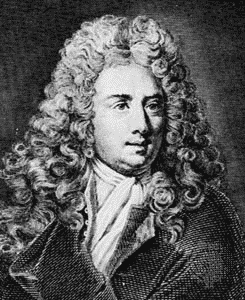
Mystery still surrounds the origins of some of the most famous tales. For instance, there are no Arabic manuscripts of Aladdin and Ali Baba which pre-date Galland's translation, leading some scholars to conclude that Galland invented them himself and the Arabic versions are merely later renderings of his original French.
Galland also adapted his translation to the taste of the time. The immediate success the tales enjoyed was partly due to the vogue for fairy stories which had been started in France in the 1690s by Galland's friend Charles Perrault. Galland was also eager to conform to the literary canons of the era. He cut many of the erotic passages as well as all of the poetry. This caused Sir Richard Burton to refer to "Galland's delightful abbreviation and adaptation" which "in no wise represents the eastern original." Burton’s translation was greeted with immense enthusiasm and had soon been translated into many other European languages: English (a "Grub Street" version appeared in 1706); German (1712); Italian (1722); Dutch (1732); and Russian (1763). They produced a wave of imitations and the widespread 18th century fashion for oriental tales.
I only know the stories from children’s versions read to me, or from Christmas pantomimes. So my task, which I am looking forward to, is to read the tales as an adult.

Because the cave art pictures tell stories, stories of the hunt, the kill. We don’t know why they were painted; perhaps they were for religious purposes. But yes, the cave artists told stories. Just like the great Artists that would follow them, thousands of years later, the cave art painters were using stories to communicate with other people.
We continued to tell stories. We were insatiable in our love of being told a tale. Thank goodness for Homer and the Greek myths; the people who wrote down the Nordic myths and all the other mythologies of the world. And I’m leaping forwards thousands of years; to Geoffrey Chaucer, and “The Canterbury Tales,” and around about the same era, the mid-fourteenth century, Giovanni Boccaccio, and “The Decameron.” For the first time in our story telling history, we had fully rounded characters, with psychological depth. They are not gods with fabulous powers, they are people, like ourselves with histories, hopes and fears.

And, of course, there is the wonderful “Arabian Nights,” or “The Thousand and One Nights”, “Les mille et une nuits”, recited nightly by Scheherazade. Those wonderfully
mesmerising stories, telling us of fabulous creatures, geniis and magic lamps.

From Wiki.
The main frame story concerns a Persian king and his new bride. He is shocked to discover that his brother's wife is unfaithful; discovering his own wife's infidelity has been even more flagrant, he has her executed: but in his bitterness and grief decides that all women are the same. The king, Shahryar, begins to marry a succession of virgins only to execute each one the next morning, before she has a chance to dishonour him. Eventually the vizier, whose duty it is to provide them, cannot find any more virgins. Scheherazade, the vizier's daughter, offers herself as the next bride and her father reluctantly agrees. On the night of their marriage, Scheherazade begins to tell the king a tale, but does not end it. The king is thus forced to postpone her execution in order to hear the conclusion. The next night, as soon as she finishes the tale, she begins (and only begins) a new one, and the king, eager to hear the conclusion, postpones her execution once again. So it goes on for 1,001 nights.

The region of Mesopotamia has an old and ancient civilisation. We have re-named it “the Middle East”. If we think about the region at all, we probably think of religious fanaticism and terrorists. Osama bin Laden and the Ayatollahs. But Mesopotamia had literature, probably before we had even discovered language. “The Arabian Nights;” or “The One Thousand and One Nights, has genre of storytelling which has influenced writers right up to the present day.

The writers of The Arabian nights, introduce us to many literary devices. Two of these are the concept of the narrator; Scheherazade herself. And the cliff hanger. Scheherazade, begins her story, but leaves off at a crucial moment. In terms of the storytelling technique, the king spares her life for another day, the reader wants to know how the story ends; so does the king. For the modern reader, Scheherazade gives us the first form of the serialisation. It still works today in stories and particularly in television.

From Wiki.
“The King lay awake and listened with awe as Scheherazade told her first story. The night passed by, and Scheherazade stopped in the middle of the story. The King asked her to finish, but Scheherazade said there was not time, as dawn was breaking. So, the King spared her life for one day to finish the story the next night. So the next night, Scheherazade finished the story, and then began a second, even more exciting tale which she again stopped halfway through, at dawn. So the King again spared her life for one day to finish the second story.”

Then there’s the unreliable narrator; how do you know whether the narrator is telling the truth? The writers of The Arabian Nights use this to great affect in "The Seven Viziers" (also known as "Craft and Malice of Women or The Tale of the King, His Son, His Concubine and the Seven Viziers"), a courtesan accuses a king's son of having assaulted her, when in reality she had failed to seduce him (inspired by the Qur'anic/Biblical story of Yusuf/Joseph). Seven viziers attempt to save his life by narrating seven stories to prove the unreliability of women, and the courtesan responds back by narrating a story to prove the unreliability of viziers. The unreliable narrator device is also used to generate suspense in "The Three Apples" and humour in "The Hunchback's Tale"

Vladimir Nabokov uses the unreliable narrator in “Lolita.” How do we know if the vile Humbert Humbert is telling the truth? He is narrating the tale to us. I think that Charles Dickens uses it too, in “Great Expectations.” The long story is told from Pip’s point of view. Dickens also used the cliff hanger device; many of his stories were published in serialised form.
There are elements of horror fiction in the Arabian Nights. The horrific nature of Scheherazade's situation is magnified in Stephen King's Misery, in which the protagonist is forced to write a novel to keep his captor from torturing and killing him. The influence of the Nights on modern horror fiction is certainly discernible in the work of H. P. Lovecraft and Edgar Allan Poe.
There’s the prototype for the very best of crime fiction; worthy of Sir Conan Doyle in “The Tale of the Murdered Young Woman” In this tale, a fisherman discovers a heavy locked chest along the Tigris river and he sells it to the Abbasid Caliph, Harun al-Rashid, who then has the chest broken open only to find inside it the dead body of a young woman who was cut into pieces. Harun orders his vizier, Ja'far ibn Yahya, to solve the crime and find the murderer within three days or else he will have him executed instead. This whodunit mystery may thus be considered an archetype for detective fiction. Ja'far, however, fails to find the culprit before the deadline. Just when Harun is about to have Ja'far executed for his failure, a plot twist occurs when two men appear, one a handsome young man and the other an old man, both claiming to be the murderer. Both men argue and call each other liars as each attempts to claim responsibility for the murder. This continues until the young man proves that he is the murderer by accurately describing the chest in which the young woman was found.
The young man reveals that he was her husband and the old man her father, who was attempting to save his son-in-law by taking the blame. Harun then demands to know his motives for murdering his wife, and the young man then narrates his reasons as a flashback of events preceding Harun's discovery of the locked chest. He eulogizes her as a faultless wife and mother of his three children, and describes how she one day requested a rare apple when she was ill. He then describes his two-week long journey to Basra, where he finds three such apples at the Caliph's orchard. On his return to Baghdad, he finds out that she would no longer eat the apples because of her lingering illness. When he returns to work at his shop, he discovered a slave passing by with the same apple. He asked him about it and the slave replied that he received it from his girlfriend, who had three such apples that her husband found for her after a half-month journey. The young man then suspected his wife of unfaithfulness, rushed home, and demanded to know how many apples remained there. After finding one of the apples missing, he drew a knife and killed her. He then describes how he attempted to get rid of the evidence by cutting her body to pieces, wrapping it in multiple layers of shawls and carpets, hiding her body in a locked chest, and abandoning it in the Tigris river. Yet another twist occurs after he returns home and his son confesses to him that he had stolen one of the apples, and a slave had taken it and run off with it. The boy also confesses that he told the slave about his father's quest for the three apples. Out of guilt, the young man concludes his story by requesting Harun to execute him for his unjust murder. Harun, however, refuses to punish the young man out of sympathy, but instead sets Ja'far a new assignment: to find the tricky slave who caused the tragedy within three days, or be executed for his failure. Ja'far yet again fails to find the culprit before the deadline has passed. On the day of the deadline, he is summoned to be executed for his failure. As he bids farewell to all his family members, he hugs his beloved youngest daughter last. It is then, by complete accident, that he discovers a round object in her pocket which she reveals to be an apple with the name of the Caliph written on it. In the story's twist ending, the girl reveals that she brought it from their slave, Rayhan. Ja'far thus realizes that his own slave was the culprit all along. He then finds Rayhan and solves the case as a result. Ja'far, however, pleads to Harun to forgive his slave and, in exchange, narrates to him the "Tale of Núr al-Dín Alí and His Son Badr al-Dín Hasan".
The tales vary widely: they include historical tales, love stories, tragedies, comedies, poems, burlesques and various forms of erotica. There are so many themes for tales in these wonderful stories; the list goes on.
Frame story
Story within a story
Dramatic visualization
Fate and destiny
Foreshadowing
Repetition
Satire and parody
Science fiction elements
And whom do we have to thank for this wonderful collection of stories? We don’t know.
The first stories in written form seem to go back to the 9th century, according to historians and scholars, but it is not known how long the stories may have existed in folk history before they were specially recorded in written form.
From Yahoo Answers.
“The Arabian Nights, is a collection of folk tales and other stories. The original concept is most likely derived from a pre-Islamic Iranian prototype that relied partly on Indian elements, but the work as we have it was collected over many centuries by various authors, translators and scholars across the Middle East and North Africa. The tales themselves trace their roots back to ancient and medieval Arabic, Persian, Indian, Egyptian and Mesopotamian folk-lore and literature. Though the oldest Arabic manuscript dates from the 14th century, scholarship generally dates the collection's genesis to around the 9th century."
"The tales in the collection can be traced to the ancient and medieval Arabic, Indian, Persian and Egyptian storytelling traditions. Many stories from Indian and Persian folklore parallel the tales as well as Jewish sources. These tales were probably in circulation before they were collected and codified into a single collection. This work was further shaped by scribes, storytellers, and scholars and evolved into a collection of three distinct layers of storytelling by the 15th century:”
We have a Frenchman, Antoine Galland, to thank, for bringing the collection to Europe and translating it for us..
From Wiki.
Antoine Galland had come across a manuscript of The Tale of Sindbad the Sailor in
the1690s and in 1701 he published his translation of it into French. Its success encouraged him to embark on a translation of a 14th-century Syrian manuscript of tales from The Thousand and One Nights. The first two volumes of this work, under the title Les mille et une nuits, appeared in 1704. The twelfth and final volume was published posthumously in 1717. Galland translated the first part of his work solely from the Syrian manuscript, but in 1709 he was introduced to a Christian Maronite monk from Aleppo, Hanna Diab, who recounted fourteen more stories to Galland from memory. Galland chose to include seven of these tales in his version of the Nights.
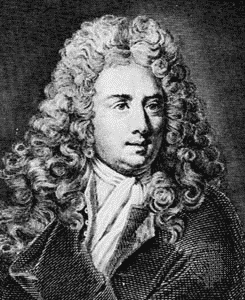
Mystery still surrounds the origins of some of the most famous tales. For instance, there are no Arabic manuscripts of Aladdin and Ali Baba which pre-date Galland's translation, leading some scholars to conclude that Galland invented them himself and the Arabic versions are merely later renderings of his original French.
Galland also adapted his translation to the taste of the time. The immediate success the tales enjoyed was partly due to the vogue for fairy stories which had been started in France in the 1690s by Galland's friend Charles Perrault. Galland was also eager to conform to the literary canons of the era. He cut many of the erotic passages as well as all of the poetry. This caused Sir Richard Burton to refer to "Galland's delightful abbreviation and adaptation" which "in no wise represents the eastern original." Burton’s translation was greeted with immense enthusiasm and had soon been translated into many other European languages: English (a "Grub Street" version appeared in 1706); German (1712); Italian (1722); Dutch (1732); and Russian (1763). They produced a wave of imitations and the widespread 18th century fashion for oriental tales.
I only know the stories from children’s versions read to me, or from Christmas pantomimes. So my task, which I am looking forward to, is to read the tales as an adult.
Friday, 11 March 2011
AM I RACIST?
I ask myself; am I racist? My response is swift; “No, of course not. Of course not. Never.” It may sound like a case of; “the lady doth protest too much,” but honestly, I don’t believe I am racist. I don’t think I’m better than anyone else, simply because they are a different colour to me, or they speak with a different accent. Those people are different to me. It doesn’t make me more important than them.
But it doesn’t hurt, does it, to have these internal dialogues sometimes? I kind of got put on the spot recently; or rather something jumped out at me, and I put myself on the spot. I was watching television, Holby City, a sort of hospital melodrama series on BBC1. This was the situation. A very English lady was quite obviously, uncomfortable at being examined by two doctors. She was white, the doctors were both black. The tension, at first, seemed to come from the patient’s modesty. An elderly lady, confronted by two youngish men, invading her privacy.
The scene went something like this:
(Woman patient in bed in hospital. A black doctor either side of the bed. The doctors need to examine her.)
WOMAN -- I don’t want you to touch me.
DOCTOR 1. -- Did I hurt you?
WOMAN. -- I want to make a complaint….Oh, what would be the point? Your sort always stick together.
DOCTOR 2 -- Your sort! What do you mean by our sort?
DOCTOR 1 -- She means doctors. Doctors always stick together.
DOCTOR 2 She means blacks! Blacks always stick together. You are racist!
WOMAN (looks at doctor 1) I am not racist. (she is silent for a moment, thinking) What is so wrong about wanting to be with your own kind?
I felt discomforted. I knew that the writers of Holby City, were making a point. The woman patient obviously was racist. She didn’t want to be close to black people, she didn’t want them touching her, breathing on her. She didn’t want to mix with them. She didn’t like them. Clearly, she could never be educated into changing her views. In her view of the world that is simply how it is. Black people and white people should not mix. And that’s when I thought, well what is wrong with wanting to be with your own kind? I debated with myself and the internal debate got quite irritated with me.
It seems to me, that the female patient in the scenario, was pointing out the obvious difference between her white self and the two black doctors. It would be silly to say that there is no difference; quite obviously, there is. Okay, all three in the scene are human beings, but human beings of a different colour. The woman’s prejudice has a long history and it is racist -- I try to imagine a scenario in which the patient in the bed is black and finds it repulsive to be treated by two white doctors. It makes a peculiar kind of sense, but it doesn’t, and I think that is because I don’t have a reference point in history to locate it to. I just can’t imagine it happening.
It is about difference, I think, and being afraid of someone who isn’t like you. Take away the colour model -- the difference could be someone of a different sexuality as you, a different religion, or no religion. The fear manifests because the individual is afraid of changes happening, the status quo being upset.
Scholars, like Michel Foucault, talk about “the Other.”
From Wiki.
“The Other or Constitutive Other (also the verb othering) is a key concept in continental philosophy; it opposes the Same. The Other refers, or attempts to refer, to that which is Other than the initial concept being considered. The Constitutive Other often denotes a person Other than one’s self; hence, the Other is identified as “different”; thus the spelling often is capitalised.
A person's definition of the 'Other' is part of what defines or even constitutes the self (in both a psychological and philosophical sense) and other phenomena and cultural units. It has been used in social science to understand the processes by which societies and groups exclude 'Others' whom they want to subordinate or who do not fit into their society. The concept of 'otherness' is also integral to the comprehending of a person, as people construct roles for themselves in relation to an 'other' as part of a process of reaction that is not necessarily related to stigmatisation or condemnation. Othering is imperative to national identities, where practices of admittance and segregation can form and sustain boundaries and national character. Othering helps distinguish between home and away, the uncertain or certain. It often involves the demonization and dehumanisation of groups, which further justifies attempts to civilize and exploit these 'inferior' others.
The region where I live in the U.K. has a lot of immigrants from Eastern Europe, particularly Polish people. I’ve overheard people grumble about them coming here; taking “our” jobs. Having access to our health service; “isn’t it shocking that there is even a Polish section in our small, town library?” They say that the Polish are miserable; they don’t smile, they don’t make eye contact with you.”
The “difference” has manifested itself; the people from Eastern Europe are the new “Other”.
Social Scientists talk about the “Folk Devil”, and “Moral Panics.” Folk Devils, like the Other, threaten the social order.
From Wiki.
A moral panic is the intensity of feeling expressed in a population about an issue that appears to threaten the social order. According toStanley Cohen, author of Folk Devils and Moral Panics (1972) and credited with coining the term, a moral panic occurs when "a condition, episode, person or group of persons emerges to become defined as a threat to societal values and interests." Those who start the panic when they fear a threat to prevailing social or cultural values are known by researchers as "moral entrepreneurs", while people who supposedly threaten the social order have been described as "folk devils."
“Moral panics are in essence controversies that involve arguments and social tension and in which disagreement is difficult because the matter at its center is taboo. The media have long operated as agents of moral indignation, even when they are not self-consciously engaged in crusading or muckraking. Simply reporting the facts can be enough to generate concern, anxiety or panic.”
Writing in the Independent newspaper, Tuesday 1st March 2011 Terence Blacker talks about Race. The article is actually about Racism in comedy, but I think it has pertinence here. Comedians feel the pressure of what it is “politically correct” to make jokes about.
“Have we ever been in such a muddle about the way race should be handled in our culture? One would think that comedy would lead the way in laughing at hypocrisy and confusion but, increasingly, it avoids the issue. There is a new nervousness about, as if laughing at prejudice is always in danger of being mistaken for laughing with it.
The problem is that these assumptions, sensible as they may be, strike at the heart of good comedy. Difference is funny; the clash of old and young, the past and the present, become meaningless if the writer is too nervous of offending the sensibilities of viewers, however unthinking those reactions may be. The result of this carefulness is to reduce the interesting, funny contrasts between different parts of our changing nation to a bland sameness. It is easier, less discomfiting, to look at what have in common.
We live in a society where difference is all around us, we should be celebrating those differences, not looking for reasons to be fearful.”
We have to pay attention to attitudes like the woman in the BBC hospital drama. Her distaste for black people, has its roots in the same ethos as Hitler and the Nazi party’s distaste for Jews. The Jew is the Nazi version of the Folk Devil. The Jew is the Other. The Holocaust, in all of its vile horror, is the manifestation of the Moral Panic at its most disgraceful and extreme. It is a shameful, disgusting event in history. Yet it happened; we don’t necessarily learn from history -- it could happen again. And the mood continues.
While on a skiing holiday in Austria, a friend took a taxi from the airport. Wanting to practice his German, my friend talked with the cab driver. This is in the year 2010, last year. The cab driver got onto the subject of the Jews. He talked about an International Jewish conspiracy to bring down the world banking systems. Jews were seeking world domination, infiltrating into governments and populations. Taking up positions in matters of culture; the Arts, television and film. Hmm…where have we heard that before?
You could almost write a little formula for demonization of a particular group. Gay people have felt the full force of it.
1.Set them apart, make jokes about them.
2.Start rumours about them.
3.They are dirty. They spread filthy diseases, which they pass on to unsuspecting straight people.
4. They congregate in exclusive groups.
5.Shout down anyone who tries to start a discussion, saying that the subject is taboo; be morally indignant and align the dissenter with the homosexuals. Jeer at him and suggest that he is one of them.
You only have to add that homosexuals are intending to become the majority, by proselytising their debauched practices to the young into the mix; start shouting, “what about the kids,” and you have the beginning of a moral panic. You certainly have homosexuals as the folk devil.
No, I’m not racist; neither am I homophobic. I may often be silly, cynical and make light of important subjects. I may be guilty of feeling uncomfortable when discussions get heated; so I’ll make a joke, try to lessen the tension. I can think of any number of people of my own ethnicity and sexuality, with whom I wouldn’t want to spend thirty seconds.
Subscribe to:
Posts (Atom)